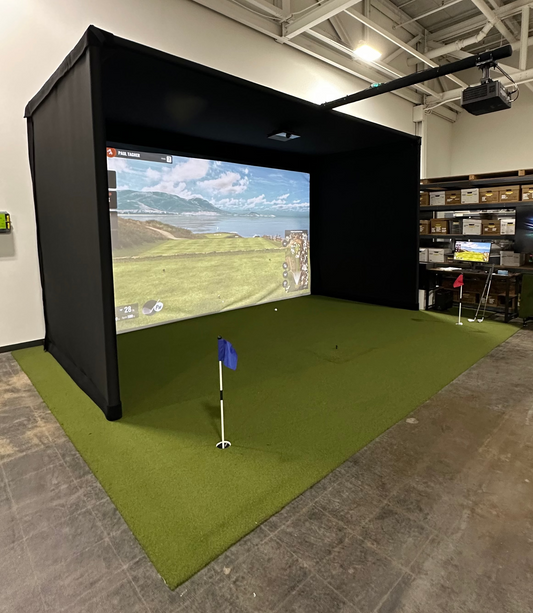
Collection: Golf Simulator Enclosure

A golf simulator enclosure is the foundation of a safe, immersive indoor golf setup. Whether you're creating a dedicated golf simulator room or upgrading an existing space, the right enclosure helps contain every shot while creating a professional practice environment. At One Stop Sim Shop, you can choose between two straightforward options: standard-sized enclosures for common room dimensions or a fully custom enclosure built to your exact specifications.

Each enclosure features a heavy-duty steel frame designed for durability and reliable ball containment. Pair your enclosure with high-quality impact screens to create a complete simulator experience that looks great and performs season after season. Whether you're planning your first build or replacing an existing setup, this guide will help you determine the right size, decide between standard and custom options, and understand which accessories you'll need to complete your simulator.

Golf Simulator Enclosure

How to Choose the Best Golf Simulator Enclosure

The best golf simulator enclosure is one that fits your room correctly, provides enough clearance for a comfortable swing, and matches your long-term goals. While aesthetics matter, proper sizing, quality construction, and compatibility with the rest of your simulator components have a much bigger impact on your experience. Before choosing an enclosure, measure your available space carefully and decide whether a standard size or custom solution is the better fit.

Sizing Your Enclosure (Room & Swing Clearance)

Before selecting a golf simulator enclosure, measure your room's width, depth, and ceiling height. A well-planned golf simulator room should provide enough clearance for your swing while allowing sufficient distance between the golfer, the impact screen, and the launch monitor.

Most setups need roughly 9-10 foot ceilings and 10-15 feet of width.

Standard-sized enclosures are an excellent option when your room matches common dimensions, and compact enclosures are also available for a smaller home setup or spare room. They simplify the buying process and allow you to get your simulator up and running quickly. For a sense of scale, the SIM 0 measures 10'10 x 8'2 x 3'3 ft, while the SIM 4 measures 13'2 x 8'2 x 4'11 ft. If your room has unique measurements or architectural challenges, a custom enclosure allows you to maximize every inch of available space while maintaining proper ball containment and player safety.

Remember to consider both right- and left-handed golfers if multiple people will be using the simulator, and always verify that your ceiling height allows for a full swing with your longest club.

Custom vs. Standard Enclosures

One Stop Sim Shop offers two clear paths for your golf simulator enclosure kit, from DIY kits to professional-grade installations.

Standard enclosures are ideal for rooms that already fit common dimensions. They provide a streamlined purchasing experience while delivering the same heavy-duty steel frame construction and professional appearance. Common formats for a golf enclosure include freestanding cages and commercial setups, and this collection covers both standard options and custom-built solutions.

The Build Your Own Custom Enclosure is designed for spaces that don't fit standard sizing. Whether your room is unusually wide, narrow, or has unique ceiling limitations, a custom solution allows you to design an enclosure that fits your space without unnecessary compromises.

Choosing between the two comes down to your room dimensions. If a standard size fits comfortably, it's often the fastest option. If your space is unique, a custom enclosure ensures your simulator looks and performs exactly as intended.

Build vs. Buy: Is a DIY Enclosure Worth It?

Many golfers researching a DIY golf simulator enclosure wonder whether building one themselves will save money or make more sense for their budget than buying a professionally built option. DIY projects using PVC pipe or other materials can certainly work for some hobbyists, especially those who enjoy fabrication and customization, and in many builds corner fittings connect the pipes to form the frame.

However, purchasing a professionally engineered enclosure offers several advantages. Heavy-duty steel frames provide greater durability, consistent fitment, improved stability, and a cleaner finished appearance. Professionally designed systems are also engineered with ball containment in mind, reducing the amount of trial and error often associated with DIY builds, and shoppers comparing lower-cost kits may also come across Carl's Place while researching DIY options.

If you enjoy building projects and have the necessary tools, a DIY enclosure may be a rewarding experience. If your priority is a polished setup that's ready for long-term use, a purpose-built enclosure provides a dependable solution with less guesswork.

Completing Your Golf Simulator Build

A golf simulator enclosure is only one part of a complete simulator. Pairing it with the right accessories creates a safer, more immersive experience while protecting both your equipment and your room.

Enclosure + Impact Screen

Your enclosure works together with your golf simulator screen enclosure components to safely absorb golf shots while displaying your simulator software, helping block ambient light and other distractions for a more immersive, realistic image.

Choosing premium impact screens helps produce sharper projected images, and proper screen tension also reduces distortion while standing up to repeated ball strikes. Purchasing both components together ensures proper compatibility and gives your simulator a clean, professional appearance that closely resembles a commercial golf facility.

Frame Padding & Ball Containment

Even the best enclosure benefits from additional protection. Quality screen frame protection helps cushion the enclosure frame, contain errant golf balls, and reduce bounce-back, ricochets, and noise from off-center shots, while side panels make the hitting area feel more contained and realistic.

For even greater protection, adding wall & ceiling protection helps safeguard the surrounding room from errant golf balls while also protecting simulator equipment and nearby furniture from accidental damage. Together, these accessories improve the safety of your setup while extending the lifespan of your simulator components.

Adding a Launch Monitor

A golf simulator becomes a complete practice system when paired with one of today's advanced launch monitors.

The launch monitor captures data such as ball speed, launch angle, spin, and shot shape, allowing simulator software to accurately recreate each shot. Whether you're practicing, playing virtual rounds, or improving your game through detailed analytics, the launch monitor is key to elevating each session, while premium enclosures support better practice sessions for golfers at every skill level.

Frequently Asked Questions

What size golf simulator enclosure do I need?

Measure your room's width, depth, and ceiling height before selecting an enclosure. The right golf simulator enclosure also depends on your overall configuration, safety, and compatibility with your launch monitor and simulator equipment. Standard-sized enclosures work well in common room dimensions, while the custom builder allows you to create an enclosure that fits unique spaces.

How much does a golf simulator enclosure cost?

Standard-sized enclosures currently start at $4,128 and range up to $6,096, while custom enclosures are priced according to your selected specifications. Pricing varies based on size, materials, and overall configuration.

Should I build a DIY enclosure or buy one?

DIY enclosures can be a good option for experienced builders, but professionally engineered steel enclosures provide greater durability, cleaner aesthetics, and reliable ball containment with less assembly uncertainty.

Custom vs. standard enclosure: Which should I choose?

Choose a standard enclosure if your room matches common dimensions. If your space has unusual measurements or layout constraints, a custom enclosure allows you to maximize available space while maintaining proper fit and function.

What do I need to complete a golf simulator enclosure?

Most simulator builds also include impact screens, with options such as Preferred for a more refined setup, screen frame protection, wall & ceiling protection, and launch monitors so you can play safely and comfortably. A complete enclosure setup also supports consistent practice, which can help improve swing mechanics over time.

Can a golf simulator enclosure be used outdoors?

Golf simulator enclosures are generally designed for indoor use. If you're considering an outdoor installation, account for weather exposure, wind, anchoring requirements, and environmental conditions before selecting your setup.